
Junwoo
2026-05-07 19:23:10
University
Why Your Newsroom’s YouTube Channel Is Packed with Articles—but Starving for Videos
🎓
Why You Pick a Shorts Template, Make Three Videos, Then Never Use It Again
Search for Shorts templates, and you’ll find an endless supply of free options. But after downloading one and making about three videos, many creators find them...

🎓
Automating shorts is easy—getting them consistently great every time is the real challenge
If you search for shorts automation, you’ll find endless workflow tutorials that promise everything at once: script generation, images, voiceover, even upload. ...

🎓
Before You Pick an AI Video Editor, Decide *What* You Actually Want to Make
When you read those “Top 5 AI video makers” listicles, they usually bundle all the trendy tools together, compare pros and cons, and highlight key features.But ...
🎓
Outsourcing AI Video? Before Getting a Quote for Just One Video, Ask Yourself: "How Many Will We Need on Repeat?"
Whenever people reach out to us about outsourcing AI video production, their first message is almost always the same. It pretty much boils down to: “So... how m...

🎓
These days, I’m running Videostew with a little help from Claude Code
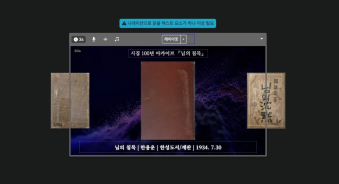
Recently, we landed a pretty big gig with our VX production service. To celebrate the opening of the Manhae Museum, we’re creating a full digital video archive ...
🎓
AI Video Creation Isn’t a Tool Problem: Where Creators Actually Get Stuck (and How to Break Through)
By the time you’ve landed on this post, you’ve probably read your fair share of “Top AI Video Tools” articles. You’ve seen everything from clip-generation servi...

🎓
Why Your Newsroom’s YouTube Channel Is Packed with Articles—but Starving for Videos
When we talk with our media clients, we hear the same thing again and again."We opened our YouTube channel two years ago, but we still don’t even have 10 videos...
🎓
Before You Outsource Your Corporate Video, Read This First!
If you’re working as a marketer in a company, you’ve probably experienced moments like this: someone from the top casually says, “Shouldn’t we be doing YouTube ...

When we talk with our media clients, we hear the same thing again and again.
"We opened our YouTube channel two years ago, but we still don’t even have 10 videos."
“We used to run it pretty actively a few years back, but now it’s just… abandoned.”
When we look deeper, the main reason is almost always the same: making even a single video takes way too much time and effort.
Turning an article into a video takes far more work than most people expect. A bigger problem is that many teams only imagine video in terms of a huge production: studio, filming crew, on-site interviews… the whole nine yards.
Hiring a dedicated in-house team feels too heavy, but outsourcing every video quickly becomes a serious cost issue.
So today, let’s talk honestly about how you can approach this problem in the real world, and walk through the options one by one.
Why do so many news organizations end up abandoning their YouTube channels?
Most print-centered newsrooms have little to no in-house video capacity. Reporters are trained to write; video editing is a completely different skill set. So even if they launch a YouTube channel with good intentions, after a few months it quietly grinds to a halt.
Of course, many companies do run separate video teams. But for reporters, the real bottleneck is getting their articles turned into timely videos. That’s where things usually get stuck.
There’s another big issue: consistency. The YouTube algorithm loves channels that upload regularly. If you upload once a week, then suddenly disappear for three weeks, your subscribers won’t grow and your views will stall.
Before long, it starts to feel like, "Maybe YouTube just doesn’t work for us."
What’s ironic is that news organizations don’t fail on YouTube because they lack content ideas. You’re literally producing new material every single day—your articles are the raw gold. What’s missing is an efficient system that turns that constant stream of articles into videos, without burning out your team or your budget.
What Really Happens When You Turn Articles into Videos Yourself
If you’ve ever tried turning an article into a video yourself, you already know: it takes a *lot* more work than you expected.
You need to adapt the article into a proper video script, find images or video assets, record narration or set up TTS, add subtitles, and then attach intros and outros. With a traditional editing workflow, even a short 2–3 minute video easily eats up 4–6 hours.
If your newsroom publishes 20 articles a day and you want all of them in video format, you’d basically need a dedicated team. (And honestly, even a full-time video team would struggle to push out 20 videos a day…)
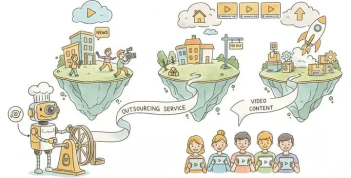
Even if you only video-ize a portion of your articles, a dedicated in-house team is expensive, and using freelancers creates a whole new layer of headaches around quality control and deadlines. That’s one big reason why done-for-you video services like our VX are in demand.
In the end, unless we fundamentally update how we think about video editing for this era, turning large volumes of articles into video just isn’t realistic. Without a proper system, no matter how hard people work, the process simply doesn’t scale.
Can AI Video Tools Really Fix This?
These days, there are tons of AI video tools on the market, and many of them are already being used in real production workflows. Some services even promise, “Just paste a URL and we’ll make the video for you.” Our own Videostew platform offers this kind of feature, and many of our clients actively use it.
But to be honest, full automation isn’t the perfect fit for every media company. AI-generated videos are fast and cost-efficient, but if you want a channel with a distinct identity, human involvement is still essential. Your brand fonts, color palette, intro style, and—most importantly—editorial decisions about *how* each story should be cut and framed: these are things AI can’t fully own yet.
So once a newsroom or channel reaches a certain size—or simply wants to maintain consistent quality—you naturally start looking beyond basic AI automation.
You can build a fully automated pipeline by connecting the Videostew API with automation tools like n8n, but that’s an engineering-heavy approach, and whether it fits really depends on your team’s resources.
What we learned from actually running video production for newsrooms…
Most of the clients for whom we currently produce videos via our VX service are news organizations.
You send us an article URL, and we use the Videostew tool to create and deliver the video. First we auto-generate it, then a producer steps in for a final polish before delivery.
After running this model for a few months, one thing became very clear: what newsrooms care about most is speed and consistency. Instead of asking us to craft one masterpiece at a time, far more teams asked us to “just publish a set number of videos every week at a reliable, predictable quality.”
VX is built precisely to meet that need. Instead of chasing a full broadcast-style production, it’s optimized for delivering fast, consistent videos on a regular cadence.
Through this workflow, we’ve been able to try different formats and new techniques, then sit down with our clients and review YouTube data together—gradually shaping a style that actually fits their audience.
Videostew VX, to be perfectly honest
We know we’re biased—it’s our own service, after all. But if we’re being as honest as possible…
VX is a perfect fit for teams that regularly need to turn articles or text content into videos. Because our in-house editors use Videostew directly to produce your videos, our rates are lower and our turnaround is faster than traditional production agencies. Pricing is around 7,000 KRW per minute, and most articles scheduled for that week are delivered as videos within 1–2 days.
Of course, VX isn’t always the right solution. For interview videos, on-site shooting, or high-end brand films where cinematic direction is crucial, a shoot-based production company will be a better match.
But if your main need is to regularly convert text articles into video, VX is absolutely worth a look. If you’re new to outsourcing corporate videos, this guide to video production costs and checklists will also help you get oriented before you decide.
Below is an AI-curated summary of the questions we hear most often during client consultations.
Frequently Asked Questions
Q. How long does it take to produce one video?
It depends on the length of the article and the final video, but we usually deliver within 1–2 business days from the request date. For ongoing contracts, we can deliver on a fixed day every week—like clockwork.
Q. Can you match the video style to our channel’s look and feel?
Yes. When we start working together, we customize templates and a style guide for your brand. A dedicated specialist who knows Videostew inside out will create templates tailored to your outlet’s brand and content tone. From then on, every delivery follows that style consistently.
Q. Is there a minimum order quantity?
For one-off projects, the base unit is 100 videos (or 100 minutes). For ongoing contracts, we can operate with a minimum of one video per day. We also offer sample test production, so feel free to reach out first and try us out!
Q. What’s the difference between generic AI videos and VX?
Typical AI automation tools simply convert an article straight into a video. VX is different: a real human editor reviews and structures the video. We decide which image fits which scene, and we carefully check whether the subtitles flow naturally from start to finish.
Q. Which is better: building my own automation with the Videostew API or using VX?
If you need to produce a large volume of videos very quickly, building your own automation is a great fit. VX, on the other hand, is ideal when you publish on a regular schedule and need to keep quality consistently high. For a detailed guide on how to build an automated pipeline with n8n and the Videostew API, check out our dedicated article.
And if your YouTube channel is currently gathering dust 🕸️ or you’re just starting to plan your digital video strategy as a news publisher, feel free to reach out to us. We’ll help you figure out which approach actually makes sense for your newsroom, not just in theory but in practice.
You can find a full introduction to the VX service on the Videostew Media page.