
hhlee
2024-10-29 14:33:12
Behind
Building Our Global Website with GPT & Copilot (Yes, AI Did the Heavy Lifting!)
🤔
Building an AI Agent from Scratch: Let's Demystify the Magic!
In our previous post, Smart Token-Saving Hacks for AI Agents, we explored quick tips to cut down on tokens right away. This time, we’re peeling back the curtain...

🤔
Smart Ways to Save Tokens with AI Agents (Without Losing the Magic)
Must be nice if your company covers your token bills, but for a scrappy startup like ours, token cost-efficiency (or simply surviving the invoice) is practicall...

🤔
Setting Up the Dev & Ops Environment for Our Secret Agents (Yes, You!)
Ever wonder how the tech behind seamless AI video editing actually gets built? Today, we’re peeling back the curtain to share how the Stew team sets up and rock...

🤔
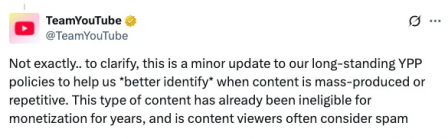
YouTube's July 15 YPP Policy Update and Three Messages I Got From It
Creators in Panic ModeStarting last week, posts like "AI videos will be blocked by July 15th" and "You won't earn ad revenue unless you use your own voice" have...
🤔
Create Advertisements with Videostew (Behind the Scenes)
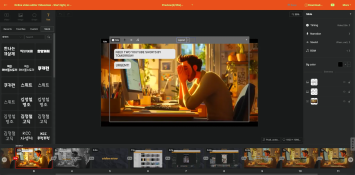
I'd like to share my experience of creating an English version of an advertisement video for posting on the Videostew Global channel. 🎥✨Rather than a tutorial, ...
🤔
Finding the Balance Between AI and Creativity
Between Automation and CreativityOver the past year, Videostew has focused on perfecting the 'essential editing features' that any video editing solution should...

🤔
Defending Against DDoS with AWS WAF: Focusing on User Experience
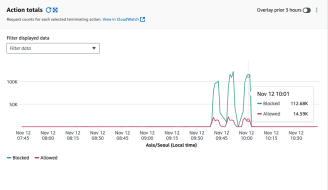
Running a website inevitably means facing abnormal traffic attacks. Especially when aiming for global services, the domain itself becomes more exposed, increasi...
🤔
Building Our Global Website with GPT & Copilot (Yes, AI Did the Heavy Lifting!)
When building a website, focusing only on your local language is totally fine, but if you're running a SaaS product with global potential, it always leaves you ...

When building a website, focusing only on your local language is totally fine, but if you're running a SaaS product with global potential, it always leaves you feeling like you're leaving money on the table. Still, going "full global" right out of the gate takes way more effort than you'd expect, which can be pretty intimidating. Here at our team, we found our own sweet spot—shipping in our native language with zero friction while seamlessly supporting global users. Here's how we pull it off!
Handling Translations Right Inside the Editor
The Catch with Traditional Key-Based i18n
Standard i18n libraries usually handle multi-language support in a classic way. While implementations vary, the core mechanism is pretty much the same: you define a key for each message, and then map that key to the corresponding text for each language. At first glance, it feels like the cleanest, most rational architecture out there.
This approach represents the textbook way of handling localization. It comes with the massive perk of letting you flexibly tack on new languages as your business scales. But when you’re still an early-stage startup with a lean dev team, this setup can quickly become a bottleneck during the transition phase.
They may seem like trivial chores, but when you're grinding through front-end features that touch tons of user-facing copy, these tiny extra steps end up draining already-scarce dev bandwidth. (And nobody likes context switching just to name a translation key!)
Baking Localized Copy Straight into the Code
To kill this friction, the Videostew team builds multi-language support at the exact same lightning speed as writing a single-language app. The trick? We intentionally limit our localized version to just one language for now: English. While this won't scale indefinitely once we unlock hyper-growth in multiple regions, it’s an absolute lifesaver for early-stage global traction targeting English-speaking audiences.
We registered a simple global helper called
directTransacross both our backend and frontend. The implementation is delightfully straightforward: the first parameter takes our native Korean message, and the second parameter takes the global English version.For any part of the UI where user-facing text appears, you can simply write it like this:
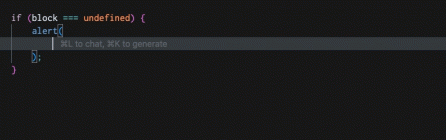
Looking at this, you might think, "Wait, don't I still have to translate it into English while writing code anyway?" Well, not if you team up with GitHub Copilot! When using Copilot or tools like Cursor AI, they cleverly pick up on your frequently used helpers, open tab definitions, and coding patterns. In other words, they understand exactly how you use custom helper functions.
Just type something like
directTrans('...followed by Korean, and the AI instantly infers that the second parameter should be the translated English text. You’re literally generating the global version of your app on the fly, right inside your code editor!< Just type in your native Korean, and auto-translated English snaps right in! >
With this workflow, you can effortlessly bypass all the tedious drawbacks of traditional localization methods we talked about earlier.
As mentioned, the goal here is to roll out a global-ready version fast and painlessly. Naturally, this might not be the ideal setup if you need hyper-refined translation quality or support for dozens of languages from day one. As your product scales, you'll want to evolve your localization stack accordingly.
Asynchronous Blog Localization
Beyond UI strings baked into your code, running a web app involves heaps of copy and content. Static pages like landing pages or Terms of Service are easy—translate them once, and you’re pretty much set. But dynamic, ever-evolving content like user guides and blog posts? Keeping up with manual translations is a guaranteed headache.
That's why at Videostew, we publish our guides first in our native Korean. Shortly after, our backend automatically detects updates and leverages GPT models to translate them into English asynchronously. While there are plenty of traditional translation APIs out there, using an LLM brings some serious superpowers to the table:
When put into practice, dealing with massive user guides (we’re talking nearly novel-length here!) makes re-translating the entire text for every tiny edit virtually impossible. That's why we generate hash keys based on the content of each paragraph, track only the modified sections, and trigger auto-translation exclusively for those updates. For this pattern, leveraging GPT’s Batch API discounts could make high-volume translation way more budget-friendly (or you could always opt for a lighter, more cost-effective model instead of the heavy-hitting frontier models—though we aren't using batching just yet!).
Below are the links to this post in both Korean and English. Fun fact: the English version was automatically translated by GPT, carefully tuned with our video editing service's unique tone and context in mind.
Global Customer Support: Lost in Translation? Not Anymore!
To deliver a seamlessly consistent customer experience paired with real-time user data integration, we built and run our own custom internal chatbot. Whenever a user reaches out in a language other than our native tongue, the bot displays the original message right alongside an automated translation. When we reply in our native language, it effortlessly translates our message back into the customer's language before hitting send.
< Seamless two-way auto-translation for multilingual inquiries >
This smart setup wipes out translation delays, letting us deliver top-tier support to our global creators around the world without skipping a beat.
Wrapping Up
We know plenty of teams are already adopting GPT across development and operations. But here’s the real takeaway: even a lean, agile crew like the Videostew team can punch well above its weight and run a smooth global service by putting AI tools like GPT to work.
--
Updated Jan 22, 2026
As our focus shifted from a standalone AI Editor toward autonomous AI Agents, our pipeline evolved into an automated workflow—running on customized translation guidelines and git hooks to automatically catch and translate any missing strings.
Updated Sep 22, 2026
With AI getting smarter by the day (almost scary, right?), we've transitioned all our new projects to the standard i18n setup—smoothly handling localized variables like a charm. As for our good old legacy systems? Turns out our global translation guidelines are doing such a flawless, zero-miss job that we didn't even need extra hooks. Talk about AI doing the heavy lifting for your videos!