
Junwoo
2026-08-06 22:09:44
University
Automating shorts is easy—getting them consistently great every time is the real challenge
🎓
Why You Pick a Shorts Template, Make Three Videos, Then Never Use It Again
Search for Shorts templates, and you’ll find an endless supply of free options. But after downloading one and making about three videos, many creators find them...

🎓
Automating shorts is easy—getting them consistently great every time is the real challenge
If you search for shorts automation, you’ll find endless workflow tutorials that promise everything at once: script generation, images, voiceover, even upload. ...

🎓
Before You Pick an AI Video Editor, Decide *What* You Actually Want to Make
When you read those “Top 5 AI video makers” listicles, they usually bundle all the trendy tools together, compare pros and cons, and highlight key features.But ...

🎓
Outsourcing AI Video? Before Getting a Quote for Just One Video, Ask Yourself: "How Many Will We Need on Repeat?"
Whenever people reach out to us about outsourcing AI video production, their first message is almost always the same. It pretty much boils down to: “So... how m...

🎓
These days, I’m running Videostew with a little help from Claude Code
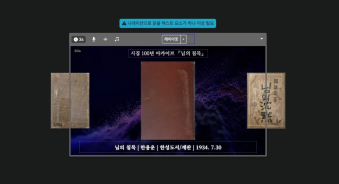
Recently, we landed a pretty big gig with our VX production service. To celebrate the opening of the Manhae Museum, we’re creating a full digital video archive ...
🎓
AI Video Creation Isn’t a Tool Problem: Where Creators Actually Get Stuck (and How to Break Through)
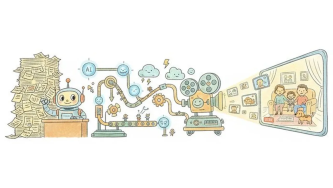
By the time you’ve landed on this post, you’ve probably read your fair share of “Top AI Video Tools” articles. You’ve seen everything from clip-generation servi...
🎓
Why Your Newsroom’s YouTube Channel Is Packed with Articles—but Starving for Videos
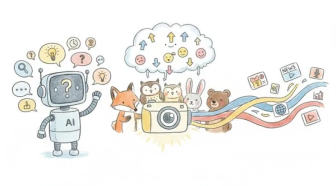
When we talk with our media clients, we hear the same thing again and again."We opened our YouTube channel two years ago, but we still don’t even have 10 videos...
🎓
Before You Outsource Your Corporate Video, Read This First!
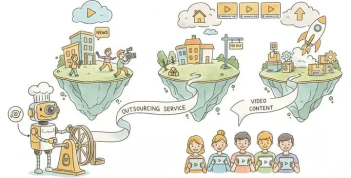
If you’re working as a marketer in a company, you’ve probably experienced moments like this: someone from the top casually says, “Shouldn’t we be doing YouTube ...

If you search for shorts automation, you’ll find endless workflow tutorials that promise everything at once: script generation, images, voiceover, even upload. But once you follow along and manage to crank out that first video, nobody tells you whether you’ll be able to run the exact same system again next week.
Running Videostew, we get a lot of questions about video automation. When we dig into the details, most people are stuck at the same point. The issue isn’t how fast you can make one video—it’s how to make every episode come out in the same format, over and over again.
What exactly are you automating when you “automate shorts”?
Shorts automation isn’t just a trick for cranking out a single video faster. It’s a system for publishing the same style of video every episode with almost no manual work. That’s why you need to think in stages, not tools. A single short typically passes through four steps before it goes live:
Most AI tools on the market automate only the third step. They do a decent job of turning a script into visuals, but they don’t handle where the material comes from or where the video ends up. If you want to call it automation, all four stages need to be wired together in a single flow.
For automation to actually run, you need new material every week
The success or failure of automation depends far less on the tools you use, and far more on whether you already have a steady stream of content. This is the part that really matters.
Looking at customers who have automation truly working, there’s a clear pattern. Newsrooms that publish articles every day, sports channels that write analysis after every game, real estate agencies where new listings keep coming in, schools that release new class materials every week. In all of these, content creation is already built into the job. Video becomes a byproduct of existing work, not a reason to start writing something new from scratch.
A local news outlet pushed out 120 videos in just four weeks during the regional election. They were already publishing written articles every day, so there was a never-ending stream of material. All they had to do was automate the video side, and boom—instant volume. Another client in the hospitality industry had years’ worth of blog posts piled up, and turned that entire archive into 57 Shorts in one go.
To be fair, the opposite case exists too. If you’re only putting out two or three videos a month, the cost of wiring up automation can actually be higher than the benefit. By the time you’ve set up templates and built a pipeline, you could have just made the videos manually. Automation only wins when you have enough episodes to make scale matter.
How to crank out Shorts with a single template
Here’s where the real work starts. The method for producing multiple episodes is surprisingly simple: you take one finished video, turn it into a template, and then just swap out the content.
Here’s how we do it in Videostew. First, open one well-made project and assign a role to each slide. The very first scene that shows your channel logo is the intro. Any scenes used for the table of contents or transitions are heads. The main content that changes every episode is the body. The final scene where you ask people to subscribe is the outro. We call these slide notes. If you don’t assign any of these, your template won’t know what to replace, and content swapping won’t work—so this step is absolutely essential.
From the next episode on, you can simply click Start with this template, paste in your new script, and you’re off to the races. At this point, it’s crucial to set the replacement range to “body only”. That way your branded intro and outro stay intact, and only the main content slides get refreshed with new material. If you set it to “replace all,” your logo animation gets wiped every time, and a human will end up rebuilding it over and over again.
It also helps to define your length standards upfront. For us, informational content aims close to 1 minute, while promotional content is kept under 40 seconds. We convert that into a character-count guideline and trim at the script stage, so by the time we’re editing, there’s almost nothing left to fix. Our trick is to lock these thresholds in as numbers, so you don’t have to rethink them for every single episode.
< Videostew editor screen. A demo project with title, intro, and outro notes assigned to each slide >
Can’t I just build my own Shorts automation with n8n?
Yes, you can. In fact, when we look at the search terms bringing people to our blog, we often see combinations like “n8n shorts automation.” That tells us a lot of folks are trying to piece this together themselves.
With tools like n8n or Make, you can absolutely chain together a flow that calls a script-generation API, an image-generation API, a voice API, and ends up spitting out a video. We’ve even documented an integration where you paste in a news article URL and Shorts get auto-uploaded to YouTube using the Videostew API + n8n combo.
You’ll notice this as soon as you try it: you don’t actually lose time on the assembly part, you lose it on building each screen. Captions end up in slightly different positions every time, font sizes break as soon as a line gets longer, and images don’t quite match the sentences they’re supposed to support. If you try to control all of that with prompts, you end up in an endless loop of tweak → render → tweak → render. Screen design is just about the worst thing you can try to manage purely with code.
That’s why the Videostew API is designed to take design out of your code entirely. You lay out the screens in the editor first—almost like working in PowerPoint—and then your code only passes in the text and images that should go into those predefined spots. With fewer things to assemble on the fly, there’s less to break and far less to maintain.
The real reason Shorts automation stalls in companies is randomness
If it’s your personal channel, it’s no big deal if two out of ten videos come out a bit weird—you just run the job again and move on. But companies don’t have that luxury. Every video on a brand channel has to look like it comes from the same place, with the same level of polish, every single time. And no social media manager wants to explain to their boss, “This one looks odd because the AI decided to be creative today.”
This is why fully generative automation rarely sticks in a corporate setting. If the system redraws everything from scratch on every run, the output will naturally vary. In contrast, when you lock the template and only swap out the content, the results become predictable. You give up some creative freedom, sure—but companies don’t get paid in freedom. They survive on predictability.
And then there are moments when predictability alone isn’t enough. For example, when you want to fix just one line of captions in just this episode. That’s when the workflow really gets tested: can you simply open the editor and tweak that line by hand? In real-world production, this makes all the difference. When everything has to be re-generated through chat instructions, that tiny change suddenly feels painfully heavy.
So, where does Videostew shine—and where doesn’t it?
We did build this thing ourselves, so sure, we might be a bit biased—but here’s as honest and objective a rundown as we can give you.
First, where Videostew is a great fit:
And yes, there are cases where Videostew is not the right tool.
< A section from the Videostew YouTube channel featuring "channels using video automation" >
You can run it yourself—or hand it off to us
Everything we’ve explained so far is something you can fully set up on your own. It usually takes about half a day to lock in your templates, and a few days to hook up the pipeline.
But here’s the real-world problem: who on your team actually has that half day and those few extra days to spare? You want to level up your content quality, but it’s hard to justify assigning a whole new person just for that. When you’re in that situation, you can simply hand it over to our VX service. Just send us your article links or manuscript files every week, and we’ll handle everything from there.
We have especially many cases from news/media companies, and in the beginning there’s always a “getting-the-style-right” period. You give us feedback, we keep refining the templates and guidelines, and after a few rounds the system runs on its own without needing separate back‑and‑forth.
Shorts Automation: Frequently Asked Questions
Q. Doesn’t automation hurt video quality?
In most cases, quality drops not because of automation, but because of the original content. If your source article is valuable, that value carries through even when you produce at scale. On the flip side, if the source is weak, even carefully handcrafted videos won’t perform well. When you consider automation, we strongly recommend focusing on the quality of the source material before the tools.
Q. How much does it cost?
If you produce videos yourself, with the Videostew SaaS, it’s roughly 210–250 KRW per 1‑minute video. It varies slightly by plan, and goes up if you use a lot of AI images. If you connect your CMS so videos are auto‑generated right at publish time, those projects typically start around 900 KRW per minute. Our VX service, where our team also handles human review, is 7,000 KRW per minute and runs in batches of 100 videos. The more videos you order, the lower the per‑minute rate becomes.
Q. We don’t have a developer. Can we still automate without using an API?
Yes, you can. APIs really start to matter when you’re publishing dozens of videos per day. If you’re at a few videos per week, our templates and Wizard mode are more than enough. Just paste in the script and pick a template—within a few minutes, you’ve got a finished video.
Q. Won’t YouTube penalize automatically generated videos?
The real problem isn’t automation itself—it’s empty, copy‑paste repetition. Channels that deliver new information in the same format every time (whether it’s news or education) actually work great. Locking in your format is smart; copying your content is a different story.
Conclusion
If you’re thinking about automating Shorts, don’t start by opening a tool comparison table. Start by counting how many videos you need to publish over the next year. If that number is in the hundreds, automation is your answer. If it’s a single digit, doing it manually will probably be faster.
If you’re in the "hundreds" camp, start by creating a single template in Videostew. Give it half a day—you’ll quickly see how different your workflow (and your next episodes) can feel.